

“GUILT- FREE" FOOD- DO NUTRITION TRENDS REALLY DELIVER ON THEIR PROMISES?
Popular recipes, alternative “breads,” desserts, vegetable-based dishes, and exotic foods are often promoted as foods you can eat without limits. But how realistic—and how healthy—is that really?
6/25/20264 min read
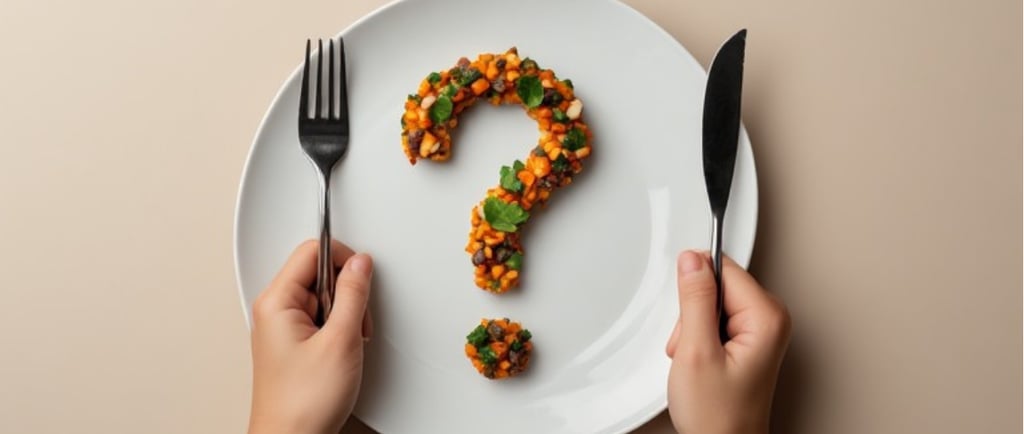
Popular recipes, alternative “breads,” desserts, vegetable-based dishes, and exotic foods are often promoted as foods you can eat without limits. But how realistic—and how healthy—is that really?
In recent years, we have increasingly encountered recipes and dietary trends presented as “guilt-free food.” They are often described as low in calories, “fit” versions of favorite foods, or meals that can be consumed in large amounts without affecting body weight.
At first glance, this approach sounds appealing. Many of these recipes do, in fact, contain high-quality ingredients and can be a great way to increase the intake of nutrient-dense foods.
However, does food that can truly be eaten without guilt actually exist? And why do we experience guilt in the first place when eating?
Most people do not feel discomfort because of food itself, but because they perceive that they are eating something of lower nutritional quality or consuming more than they need. Therefore, the concept of “guilt-free eating” should not mean unlimited consumption, but rather making smart choices with high-quality foods in amounts that meet the body’s actual needs.
Bread That Isn’t Really Bread
One of the most common examples includes various “bread” alternatives made from eggs, nuts, and seeds.
These recipes are often marketed as substitutes for traditional bread, creating the impression that they can be consumed without restriction because they contain no flour.
In reality, the composition of these products is very different from conventional bread. Nuts and seeds are among the most nutrient-dense foods, but also among the most energy-dense, averaging around 550–700 kcal per 100 g. In comparison, the same amount of flour contains approximately 330–370 kcal.
While numbers alone do not tell the full story, they illustrate an important point: replacing flour with nuts does not automatically result in a “lighter” or lower-calorie product. In many cases, the result is a more nutrient-dense but also more energy-dense meal. A slice of almond-and-egg bread may contain the same—or even higher—caloric value than a slice of whole-grain bread.
This does not mean such breads are unhealthy—on the contrary, they can be highly nutritious and a good occasional option within a balanced diet. The problem arises when they are perceived as foods that can be eaten in unlimited quantities. Nutritional quality and energy density are not the same thing.
Cakes “Without White Flour”
A similar principle applies to cakes marketed as healthier or “fit” versions, whether they are made without flour, with oats, whole-grain flour, or ground nuts.
Although these versions may be richer in fiber, healthy fats, and micronutrients, ingredient substitution does not automatically mean a lower calorie intake. In many cases, the energy value remains similar, with the main difference being nutrient composition and satiety rather than a “lighter” food overall.
In both traditional and “fit” desserts, energy intake can be further adjusted by reducing sugar or sweeteners, controlling portion size, choosing higher-quality dark chocolate, and selecting lower-fat dairy products—regardless of the recipe base.
Vegetable-Based Substitutes for Pasta and Pizza
Zucchini noodles, cauliflower rice, or cauliflower-based pizza crusts can be a very useful way to increase vegetable intake and add variety to the diet.
However, to make these dishes more palatable, they are often enhanced with additions such as cheese, cream, oils, or other high-fat ingredients. These additions can significantly increase the total caloric value of the meal, sometimes bringing it close to that of traditional versions.
On the other hand, if vegetable-based meals are consumed without adequate balance of protein and fats, they may be less satiating, which can lead to quicker return of hunger and potentially higher overall food intake later in the day.
These alternatives can be particularly useful in specific medical conditions where macronutrient intake needs to be adjusted while maintaining meal structure. For most healthy individuals, however, they represent just one option within a varied diet—not necessarily a nutritional upgrade.
Exotic Foods and “Superfoods”
The trend of incorporating avocados, chia seeds, lentils, millet, and other so-called “superfoods” is also not a guarantee of body weight regulation.
These foods are nutritionally valuable and contribute to dietary diversity, but they are not magical. Replacing bread, potatoes, or eggs with exotic alternatives will not automatically lead to weight loss.
Nutrient-dense and low-calorie are not synonymous. Total energy intake remains the primary factor when it comes to balancing the body’s needs.
Why “Eating Half a Tray Without Guilt” Can Become a Problem
Regular consumption of very large portions, even of low-calorie foods, can alter our perception of what a normal portion size is. If over time we become accustomed to needing large volumes of food to feel full, this behavior may carry over to more energy-dense foods, making balanced eating more difficult to maintain.
Healthy eating does not mean constantly overeating “healthy foods,” but rather developing a relationship with food in which quality and quantity are balanced.
How to Use Food Trends to Your Advantage
Dietary trends are not necessarily negative—they can encourage us to try new foods, learn more about nutrition, and diversify our meals.
For most healthy individuals aiming to improve diet quality or regulate body weight, the fundamentals remain the same:
more whole, minimally processed foods
moderation in portion sizes
variety and balance
regular meals
adequate hydration
sufficient sleep
The healthiest choice is not the most popular one, but the one that is sustainable in the long term, balanced, and adapted to everyday life.
And that is exactly what “guilt-free eating” should represent: a part of a healthier, more authentic life.
YOUR. HEALTHY. AUTHENTIC.
minutrio
Adresa
3721 Single Street
Quincy, MA 02169
Contact
+387 63/764-202 (Viber)
minutrio@minutrio.com