

BLOOD TYPE DIETS- HOW EVIDENCE -BASED ARE THEY?
How Scientifically Supported Are Blood Type Diets, and Why Do Some People Still Benefit from Them?
6/2/20263 min read

How Scientifically Supported Are Blood Type Diets, and Why Do Some People Still Benefit from Them?
Nutrition represents much more than simply energy intake and the balance of macro- and micronutrients. Throughout history, various theories have emerged regarding the factors that influence the way we eat and how our bodies respond to different foods. The physical texture of food, emotional factors, personal preferences, and lifestyle are just some of the elements that shape and support eating habits, while many others continue to be explored.
One of the more intriguing ideas that has attracted significant public attention is the theory that blood type can influence the optimal way of eating.
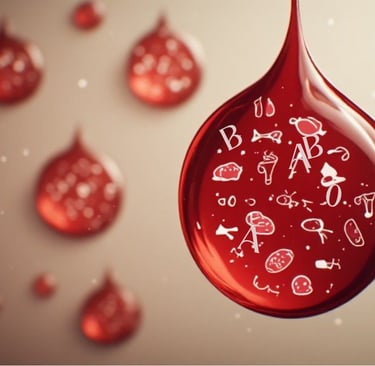
This concept was popularized by the book Eat Right 4 Your Type, written by naturopathic physician Peter J. D’Adamo. The theory is based on the assumption that blood types are essentially "historical markers" reflecting different stages of human evolution.
According to this model, blood type O is considered the oldest and is associated with a period when humans primarily lived as hunters. Therefore, individuals with this blood type are encouraged to follow a diet rich in meat and other protein sources.
Blood type A is linked to the development of agriculture, leading to recommendations for a diet largely based on plant foods and grains.
Blood type B is associated with nomadic populations, and therefore a more varied diet that includes dairy products is recommended.
Blood type AB is considered the most recent blood type from an evolutionary perspective, and individuals with this blood type are advised to combine the dietary principles suggested for blood types A and B.
The book also discusses a form of “enzymatic compatibility,” suggesting that certain foods may cause digestive discomfort in some individuals if they are not compatible with their blood type.
In short, the recommendations can be summarized as follows:
• Blood Type O – Meat and other protein-rich foods
• Blood Type A – Primarily plant-based foods and grains
• Blood Type B – A varied diet that includes dairy products
• Blood Type AB – A combination of the recommendations for blood types A and B
One recommendation shared across all blood types is to limit the intake of highly processed foods, refined sugars, and ultra-processed products.
How Scientifically Supported Is This Approach?
Although the concept sounds interesting and is thoroughly developed, it is important to emphasize that there is currently insufficient scientific evidence to support the claim that blood type determines the ideal diet for an individual.
Over the past several years, numerous studies have attempted to determine whether a relationship exists between blood type and the benefits of specific dietary patterns. To date, no such connection has been demonstrated in a way that would justify recommending a particular diet solely on the basis of blood type.
Furthermore, modern populations are the result of extensive migration and genetic mixing over thousands of years. As a result, it is difficult to assume that an individual's complex nutritional needs could be determined by a single factor such as blood type.
It is also interesting to note that this model recommends the broadest and most diverse diet for individuals with blood type AB, while people with other blood types are advised to follow various dietary restrictions. In practice, however, dietary diversity is widely considered one of the fundamental principles of a healthy and balanced diet for most people, regardless of blood type.
Why Do Some People Feel Better Following This Diet?
Despite the lack of clear scientific evidence, many people report feeling better after adopting a blood type diet.
A likely explanation is not necessarily a direct relationship between blood type and food choices. More plausibly, the improvement results from reducing the consumption of highly processed foods, increasing the intake of whole foods, and paying greater attention to overall eating habits.
When individuals begin following a structured dietary approach and make more conscious food choices, they often experience positive changes because they feel they are actively doing something beneficial for their health. This can serve as a valuable foundation for long-term improvements in quality of life, especially when guided by qualified professionals and supported by scientific evidence.
However, the long-term exclusion of entire food groups without a clear medical reason may increase the risk of deficiencies in certain vitamins, minerals, and other essential nutrients, particularly if the diet is not carefully planned.
Conclusion
Although D’Adamo’s theory continues to have a large following worldwide, current scientific evidence does not support the idea that blood type directly determines the best diet for an individual.
Many of the benefits people report can be explained by general principles of healthy eating, improved food choices, reduced consumption of processed foods, and better meal planning. However, any dietary pattern that involves long-term restriction of entire food groups may reduce dietary diversity and increase the risk of inadequate intake of certain vitamins, minerals, and other nutrients.
As a source of motivation for adopting healthier habits, this model may serve as a useful first step for some individuals. Nevertheless, decisions about long-term dietary practices are better based on individual needs, health status, lifestyle factors, and professional guidance rather than solely on blood type.
Yours. Original. Authentic.
minutrio
Adresa
3721 Single Street
Quincy, MA 02169
Contact
+387 63/764-202 (Viber)
minutrio@minutrio.com